

Home / Guides / Carbon monoxide alarm rules
Carbon monoxide alarm rules for Scottish homes
Since February 2022, every home in Scotland needs a carbon monoxide alarm in any room with a boiler, fire, stove or flue, as well as interlinked smoke and heat alarms. Here’s what that means for you.
- 2022the year the law changed, on 1 February
- 10years, the most a sealed alarm lasts
- 1 to 3mfrom the boiler, fire or stove
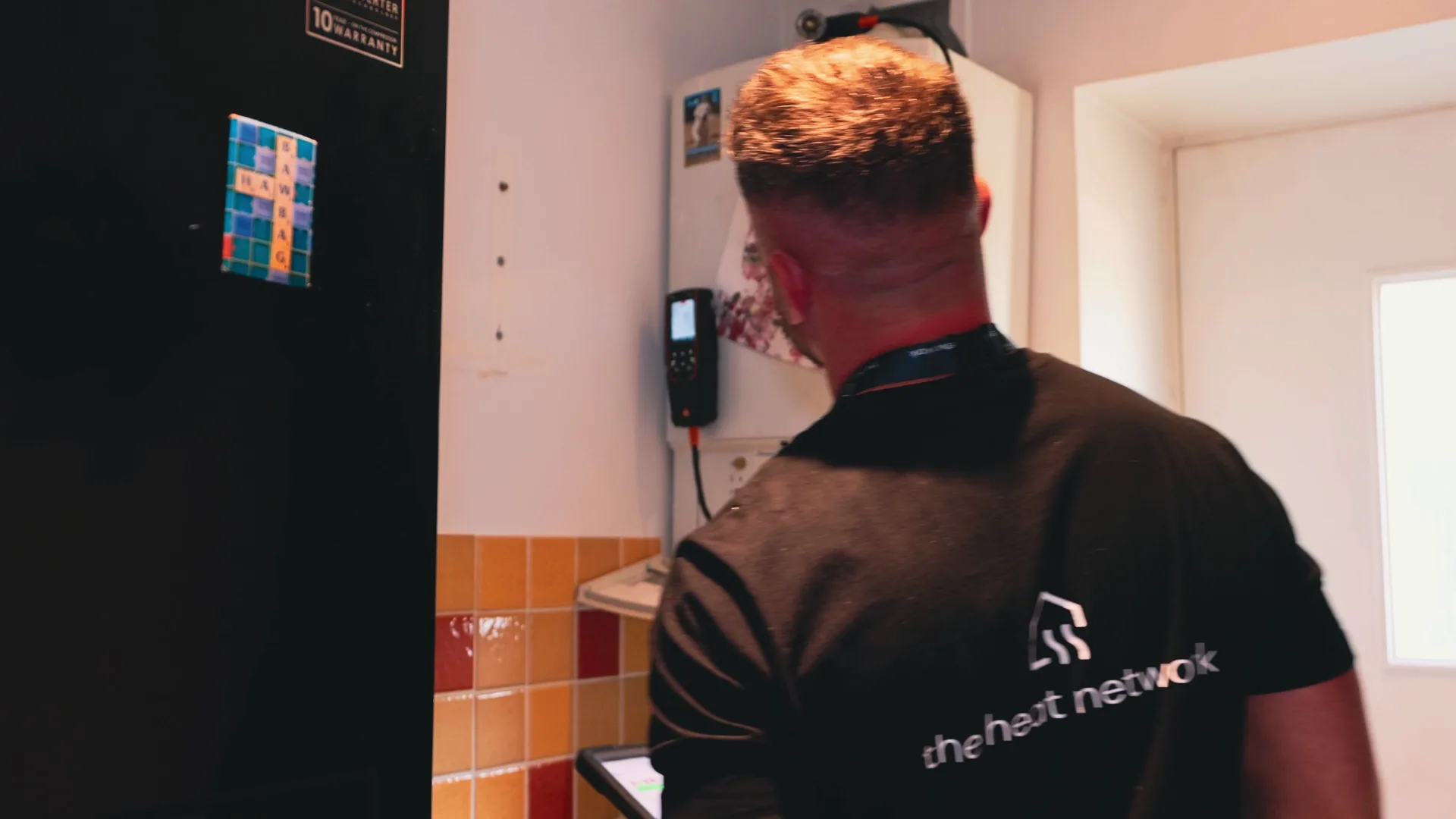 COno colour, no smell
Carbon monoxide has no colour, no smell and no taste. A boiler, fire or stove that isn’t burning properly can produce it, and the only reliable way to know it’s there is an alarm.
Since 1 February 2022, the law in Scotland says every home must have interlinked smoke and heat alarms, and a carbon monoxide alarm wherever there’s a carbon-fuelled appliance or a flue. It applies to homeowners as well as landlords.
Here’s what you need, where it goes, and what to do if it ever sounds.
What the law says
The Scottish standard for every home.
- A smoke alarm in the room you use most during the day
- A smoke alarm in every hallway and landing
- A heat alarm in the kitchen
- All smoke and heat alarms on the ceiling and interlinked
- A carbon monoxide alarm in any room with a boiler, fire, non-electric heater or flue
The carbon monoxide alarm doesn’t need to be linked to the fire alarms. A gas cooker or hob on its own doesn’t need one.
Which type should I buy?
Either a sealed battery alarm, which lasts up to 10 years and you can fit yourself, or a mains wired alarm fitted by an electrician. Look for a British Kitemark and EN 50291 on a carbon monoxide alarm.
If you rent your home, it’s your landlord’s job to fit them. If you own it, it’s yours.
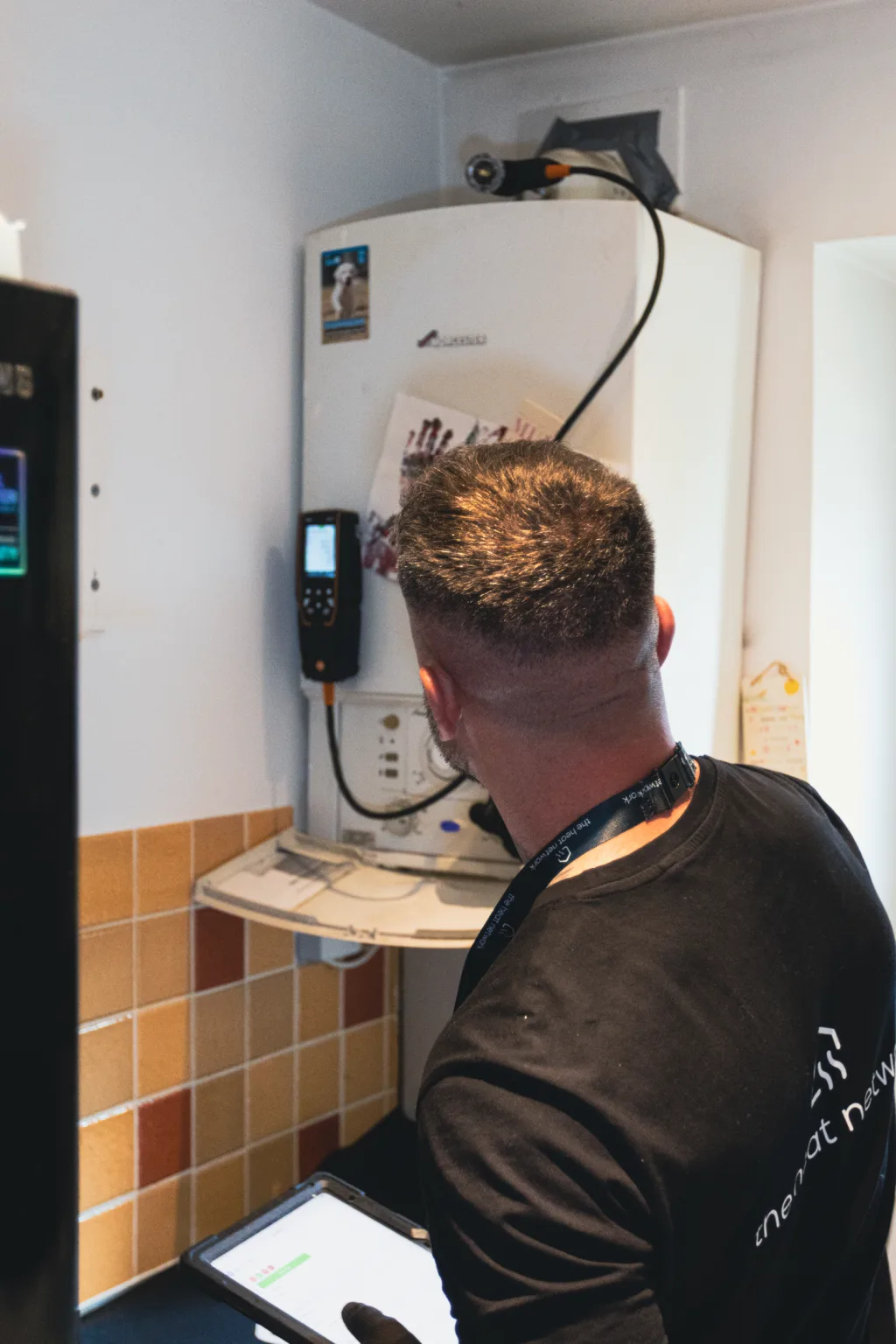 Checked at every service
Where to put it
Placement matters as much as having one.
Always follow the instructions that come with the alarm. As a guide, the Scottish Government’s tolerable standard guidance, which applies to every home, says:
- In the same room as the boiler, fire or stove
- On the ceiling, at least 300mm from any wall
- Or on a wall, at least 150mm below the ceiling and above any door or window
- If the boiler is in a cupboard, outside the cupboard, 1 to 3 metres away
- If the boiler is in the loft, one near the boiler and one by the hatch
- In any bedroom or living room a flue runs through
Where not to put it
Not above a sink, next to a cooker, beside an extractor fan, door, window or vent, behind curtains or furniture, or anywhere damp.
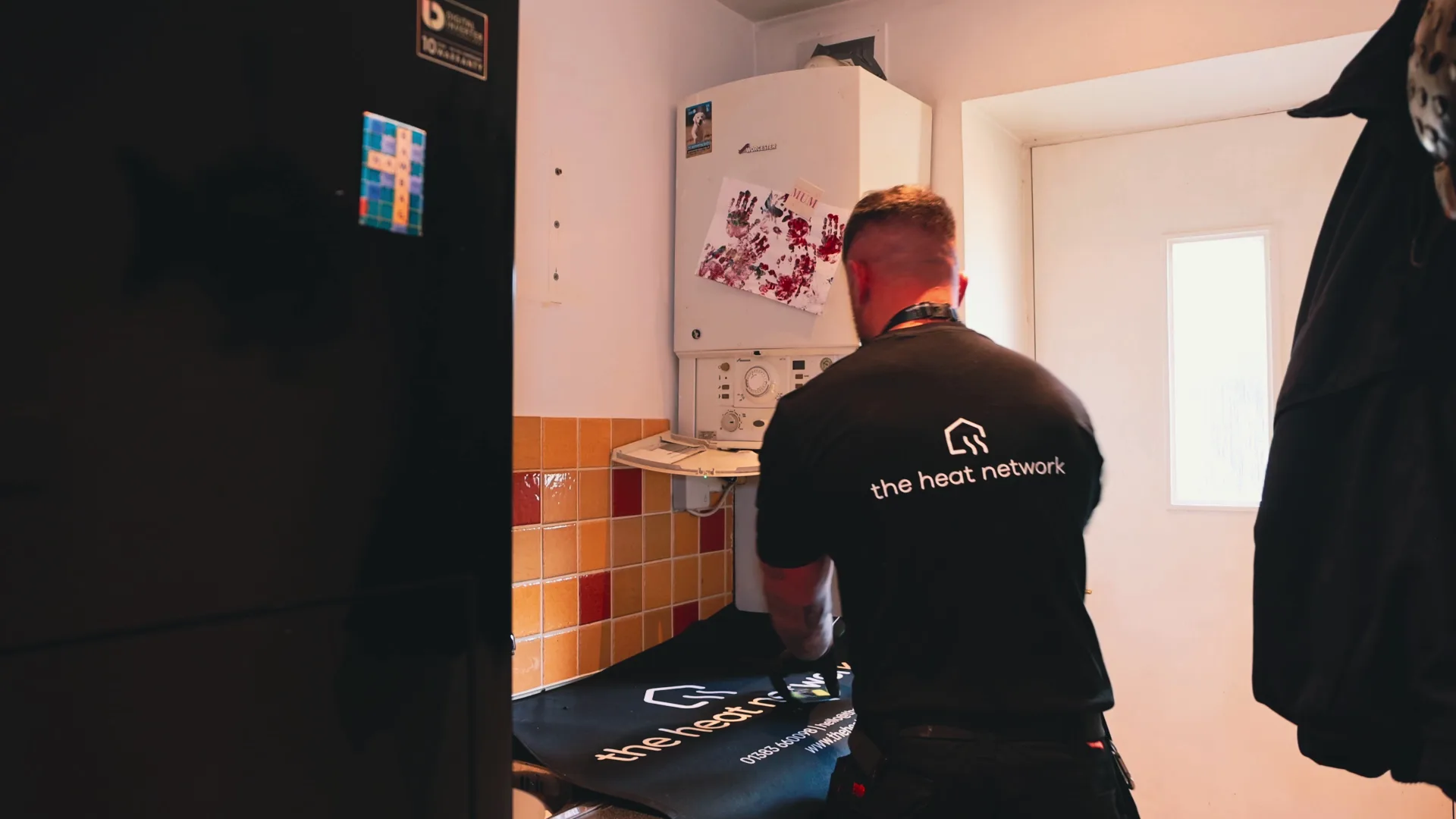 Boiler in the kitchen
Signs to look out for
Headaches, dizziness, feeling sick, tiredness, confusion or breathlessness that ease when you go outside. On gas appliances, a lazy yellow or orange flame, soot or black marks.
If your alarm goes off
Treat it as real until an engineer says otherwise.
Open up
Open doors and windows to let fresh air in.
Switch off and get out
Turn off the appliance if you can do it straight away, then get everyone out of the house. Don’t go back in to look for the cause.
Call for help
For gas, call the National Gas Emergency Service on 0800 111 999, any time of day or night.
Get checked
If anyone feels unwell, get medical advice. Don’t use the appliance again until a Gas Safe registered engineer has checked it.
The three alarms at a glance
| Where | Interlinked? | Look for | |
|---|---|---|---|
| Smoke alarm | Living room, every hallway and landing | Yes | BS EN 14604 |
| Heat alarm | Kitchen | Yes | BS 5446-2 |
| Carbon monoxide alarm | Any room with a boiler, fire, stove or flue | Not required | Kitemark, EN 50291 |
From mygov.scot and the Scottish Government’s tolerable standard guidance, checked 1 November 2026.
Common questions
Do I need a carbon monoxide alarm if my boiler is in the kitchen?
Yes. The boiler means the kitchen needs a carbon monoxide alarm, as well as the interlinked heat alarm every kitchen needs. A gas cooker on its own wouldn’t need one.
Does the carbon monoxide alarm have to be linked to my smoke alarms?
No. The law says smoke and heat alarms must be interlinked, but the carbon monoxide alarm doesn’t need to be. Some kits link them all, which is fine.
Is a plug-in carbon monoxide alarm OK?
Not for the Scottish standard. It needs to be a sealed battery alarm or a mains wired one fitted by an electrician. Plug-in alarms can be unplugged and forgotten.
How long do carbon monoxide alarms last?
Sealed battery alarms last up to 10 years. There’s an expiry date on the alarm, and it should be replaced on or before that date. Most will also start to warn you when they’re near the end.
Do I need one if I have an electric boiler?
No. The rule covers carbon-fuelled appliances such as gas, oil and solid fuel boilers, fires and stoves. An electric boiler doesn’t burn anything.
Does the law apply to homeowners or only landlords?
Both. Homeowners are responsible for their own homes. Landlords have to meet it under the Repairing Standard, which needs a carbon monoxide alarm in every room with a fixed combustion appliance.
Will you check my carbon monoxide alarm at my service?
Yes. We test the carbon monoxide alarm as part of every boiler service, and we’ll tell you if it’s missing, in the wrong place or past its date.
Related pages
Sources: mygov.scot, home fire safety; Scottish Government, tolerable standard guidance on fire and carbon monoxide detection. Checked 1 November 2026.
Not sure what you need? Give us a shout.
Book online in a couple of minutes or give the office a call, Mon to Fri, 9am to 5pm. We’ll tell you what we think, and if the answer is to leave things as they are, we’ll say that too.
Worcester Bosch Accredited Installer
Guarantees of up to 12 years on the boilers we fit. Gas Safe registered. Fife Trusted Trader. 400+ customer reviews.