

Home / Guides / Bleeding a radiator
Does my radiator need bleeding?
If it's cold at the top and warm at the bottom, almost certainly. Bleeding lets the trapped air out, takes a few minutes, and all you need is a radiator key and a cloth.
- Topcold at the top means air
- Bottomcold at the bottom means sludge
- 1.2 to 1.5bar: top up to after bleeding
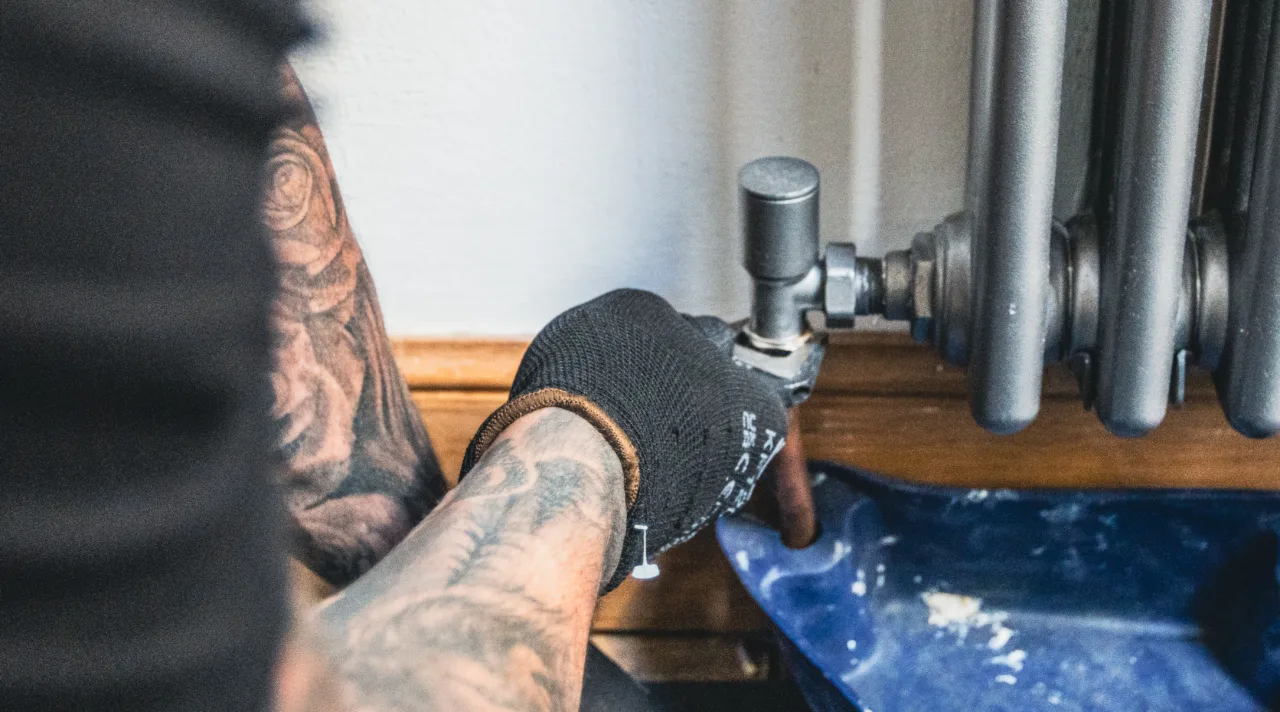 Keyand a cloth
Air gets into every heating system over time. It rises to the top of the radiators and stops hot water filling them.
Letting it out is one of the few heating jobs anyone can do. Here's how, and what it means if it doesn't work.
Signs of trapped air
Feel the radiator with the heating on.
- Cold at the top, warm at the bottom
- Gurgling or trickling sounds in the radiator
- Some rooms take much longer to warm up than others
If the radiator is cold at the bottom and warm at the top, that's different. Bleeding won't help, and the section further down explains why.
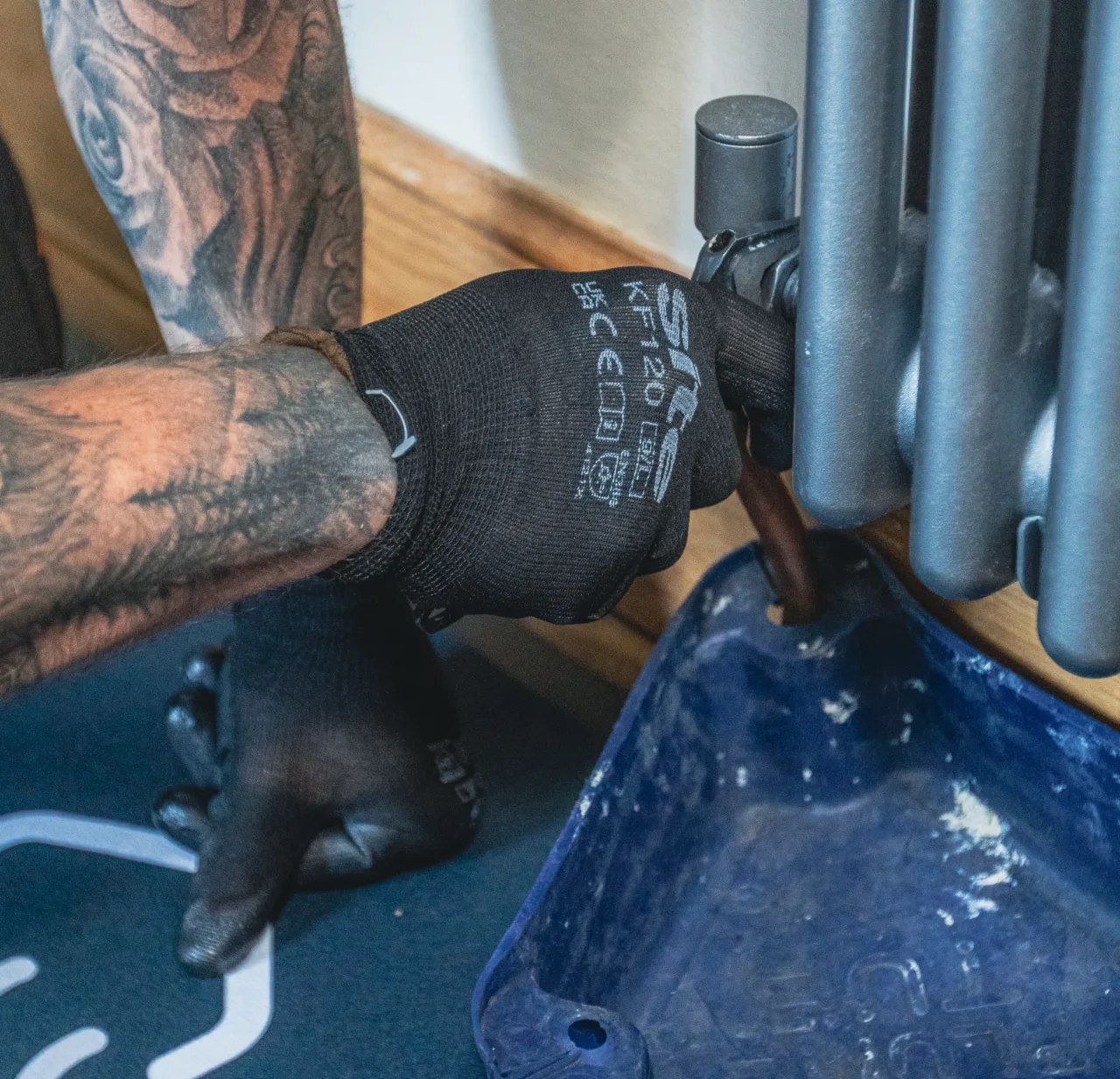 Air at the top
How to bleed a radiator
You need a radiator key, from any hardware shop, and an old cloth.
Heating off
Switch the heating off and let the radiators cool.
Cloth ready
Hold the cloth under the small bleed valve at the top corner of the radiator.
Open, then close
Turn the key a quarter turn anti-clockwise. Air hisses out. When water appears, close it. Don't overtighten.
Check the pressure
Bleeding lowers the boiler pressure. Top it up to 1.2 to 1.5 bar if it's dropped.
Tip
Start downstairs and work up. If you need to top up, our pressure guide shows how.
Still cold after bleeding?
Then it's not air.
Cold at the bottom
That's sludge: black sediment from corrosion inside the system, settling in the bottom of the radiator. Bleeding won't shift it. A power flush clears it, and a magnetic filter stops it building up again.
Other causes
- A stuck pin in the thermostatic valve, so it stays shut. See our TRV guide
- The system needs balancing, so hot water reaches the radiators furthest from the boiler
- A weak or failing pump
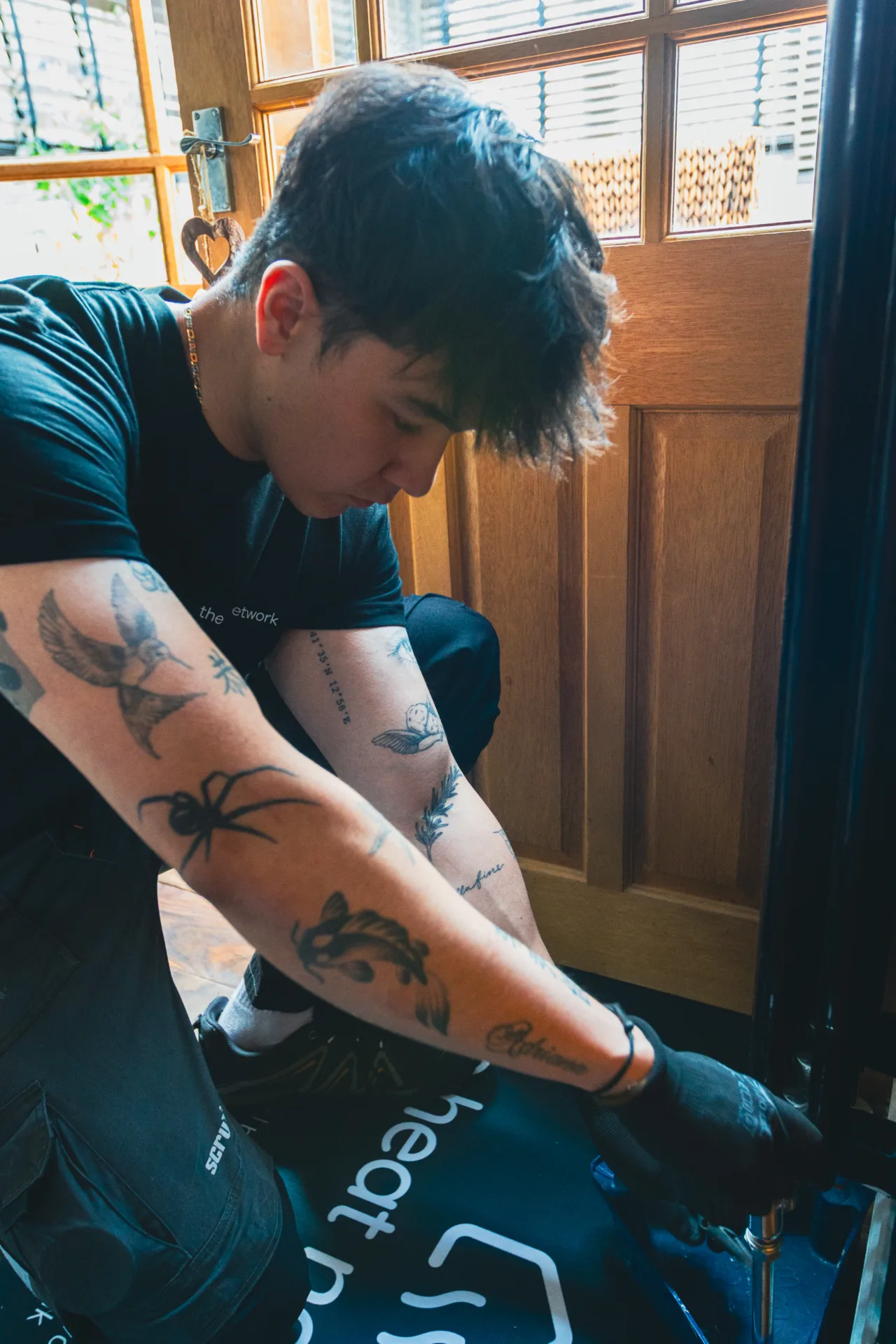 When it's not air
Which one sounds like you?
- Gurgling from the boiler tooNoisy boiler
What the noises mean.
- Cold at the bottomSludge
A power flush clears it.
- One radiator stays coldCheck the valve
Often a stuck TRV pin.
- Pressure dropped after bleedingTop it up
Back to 1.2 to 1.5 bar.
Common questions
How often should I bleed my radiators?
Only when they need it, when they're cold at the top. Some homes need it once a year, some hardly ever.
Do I need to turn the heating off to bleed a radiator?
Yes. It's safer, as the water can be very hot, and it stops the pump pulling more air in while you work.
Why has my boiler pressure dropped after bleeding?
Letting air out lowers the pressure. Top it up to 1.2 to 1.5 bar with the filling loop.
What if water won't come out of the bleed valve?
The valve may be blocked, or the pressure may be very low. Check the boiler gauge first. If it reads fine, call us.
My radiator is cold at the bottom. Will bleeding help?
No. That's sludge, not air. A power flush clears it.
Can you bleed and balance my radiators?
Yes. We bleed, balance and replace radiators and valves across Fife.
Related pages
Not sure what you need? Give us a shout.
Book online in a couple of minutes or give the office a call, Mon to Fri, 9am to 5pm. We'll tell you what we think, and if the answer is to leave things as they are, we'll say that too.
Worcester Bosch Accredited Installer
Guarantees of up to 12 years on the boilers we fit. Gas Safe registered. Fife Trusted Trader. 400+ customer reviews.